
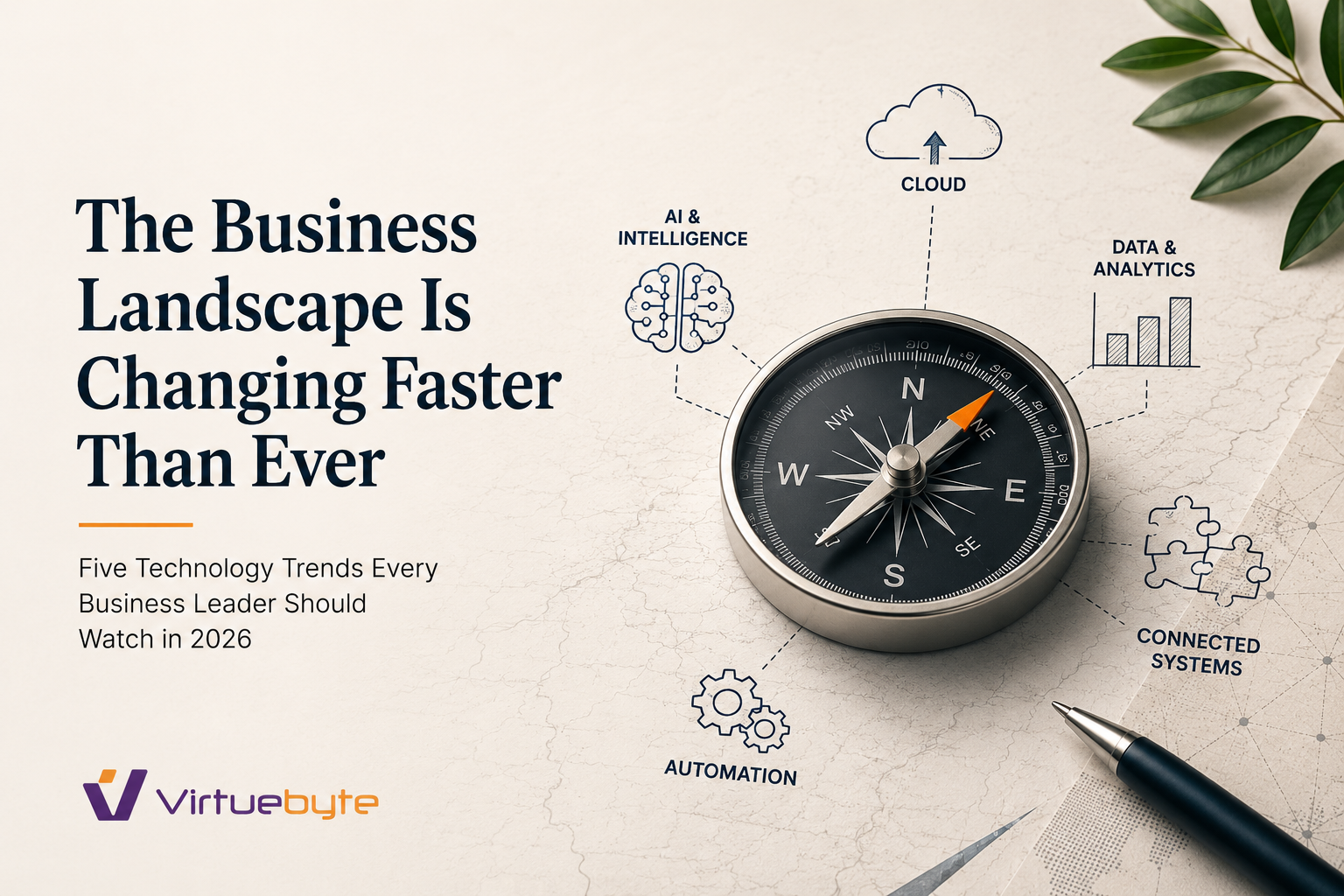
The Business Landscape Is Changing Faster Than Ever: Five Technology Trends Every Business Leader Should Watch in 2026
Overview
If someone had asked a business leader five years ago about the biggest challenges facing their organization, the answers would probably have revolved around market competition, customer acquisition, operational efficiency, or economic uncertainty. Technology certainly played an important role, but for many organizations it was still viewed as a supporting function rather than a business driver.
Today, that perspective has changed considerably. Technology is no longer confined to IT departments or software teams. Decisions related to artificial intelligence, cloud platforms, business analytics, automation, cybersecurity, and customer experience are increasingly becoming boardroom discussions because they influence how organizations grow, compete, and respond to market changes.
What makes 2026 particularly interesting is that businesses are no longer evaluating technology simply because it is new. The excitement surrounding digital transformation has matured into a more practical conversation. Organizations are asking different questions today. Instead of wondering "Should we adopt AI?", they are asking "Where can AI genuinely improve our business?" Instead of investing in software because competitors are doing so, they are looking for measurable business value, operational efficiency, and long-term sustainability.
This shift reflects a broader change taking place across industries. Businesses have become more selective in their technology investments. Economic uncertainty, increasing customer expectations, rising operational costs, and growing competition have forced organizations to evaluate every technology decision more carefully than before. As a result, several technology trends are beginning to stand out—not because they are fashionable, but because they are solving real business problems.
What Is Changing?
Perhaps the most noticeable change is that technology is moving away from isolated implementations toward connected business ecosystems. Organizations have spent years investing in ERP systems, CRM platforms, accounting software, analytics tools, and various departmental applications. While each system performs its intended function, many businesses are now realizing that the real value lies not in individual applications but in how effectively these systems work together.
Artificial Intelligence is another example of this transition. During the initial wave of AI adoption, much of the attention focused on content generation, conversational chatbots, and language models. Those capabilities remain impressive, but the conversation has gradually shifted toward operational use cases. Businesses are exploring AI for document processing, predictive maintenance, demand forecasting, intelligent customer support, software development, quality inspection, and business analytics. AI is becoming less of a novelty and more of a business capability.
Cloud computing is also entering a different phase. Earlier cloud initiatives often centered around infrastructure migration or reducing hardware costs. Today, organizations view cloud platforms as enablers of collaboration, scalability, resilience, and continuous innovation. The focus has expanded from simply moving applications to creating digital environments that can adapt as business requirements evolve.
Data, which was once considered a by-product of business operations, has become one of the most valuable organizational assets. Companies are collecting more information than ever before, yet many are discovering that the volume of data alone provides little competitive advantage. What matters increasingly is the quality, consistency, and accessibility of that information. Reliable data has become the foundation for analytics, automation, and AI-driven decision-making.
Why Does It Matter?
The significance of these developments extends beyond technology itself. Every business decision today is influenced, directly or indirectly, by information. Whether forecasting demand, managing inventory, understanding customer behavior, planning production schedules, or evaluating financial performance, organizations rely on data to guide their decisions.
When business information is fragmented across multiple systems, decision-making becomes slower and less reliable. Teams spend valuable time reconciling spreadsheets, validating reports, searching for documents, or manually transferring information between applications. These activities rarely create value for customers, yet they consume significant organizational effort.
This explains why digital transformation initiatives are increasingly focused on business outcomes rather than software implementation alone. Organizations are looking for solutions that improve collaboration, eliminate repetitive work, and provide a unified view of business operations. Services such as Salesforce implementation services in Austin, Salesforce integration services in Austin, and AI consulting services in Austin are often being considered not simply because they introduce new technology, but because they help organizations connect processes, improve visibility, and make faster business decisions.
Similarly, organizations investing in data analytics consulting in Austin, business intelligence consulting, and machine learning consulting are recognizing that technology delivers the greatest value when it is built upon accurate and well-managed information rather than isolated datasets.
Five Trends Worth Watching
Several technology developments are expected to influence business strategy throughout 2026.
The first is the movement from AI experimentation to AI implementation. Organizations are becoming more disciplined in identifying specific business problems where AI can deliver measurable improvements instead of pursuing AI for its own sake.
The second trend is the growing emphasis on connected business platforms. Rather than maintaining separate systems for sales, finance, operations, customer service, and reporting, businesses are investing in integrated platforms that enable information to flow seamlessly across departments.
A third trend is the increasing importance of business analytics. Executives are looking beyond traditional reporting toward predictive insights that help anticipate customer demand, operational risks, and future business opportunities.
The fourth trend is cloud modernization. Rather than treating cloud migration as a one-time infrastructure project, organizations are using cloud technologies to improve agility, resilience, and innovation across the enterprise. This explains the continued demand for cloud migration services in Austin, AWS cloud consulting in Austin, and Azure cloud consulting in Austin.
Finally, organizations are placing greater emphasis on governance, cybersecurity, and data management. As AI adoption increases, businesses recognize that trust, security, compliance, and data quality are becoming just as important as the technology itself.
Challenges Ahead
Despite the opportunities, organizations continue to face significant challenges. Legacy systems remain deeply embedded within many businesses, making integration more complex than expected. Data quality issues, inconsistent business processes, and resistance to organizational change frequently limit the success of digital initiatives. In many cases, technology itself is not the primary obstacle; rather, it is the alignment of people, processes, and information that determines long-term success.
Another challenge is the speed of technological change. New platforms, AI capabilities, and automation tools continue to emerge at an unprecedented pace. Business leaders are therefore required to balance innovation with stability, ensuring that technology investments support long-term business objectives rather than short-term trends.
Looking Ahead
The pace of technological innovation is unlikely to slow in the coming years. Artificial intelligence will continue to evolve, business analytics will become increasingly predictive, cloud platforms will become more intelligent, and organizations will rely more heavily on connected digital ecosystems. However, the businesses that derive the greatest value from these technologies will not necessarily be those that adopt every new innovation first. They will be the organizations that understand their business challenges, build strong digital foundations, and invest in technologies that support clearly defined business objectives.
For business leaders, the question is no longer whether technology will influence their organization. It already does. The more important question is whether today's decisions are preparing the business for tomorrow's opportunities.
\
Related Blog Posts
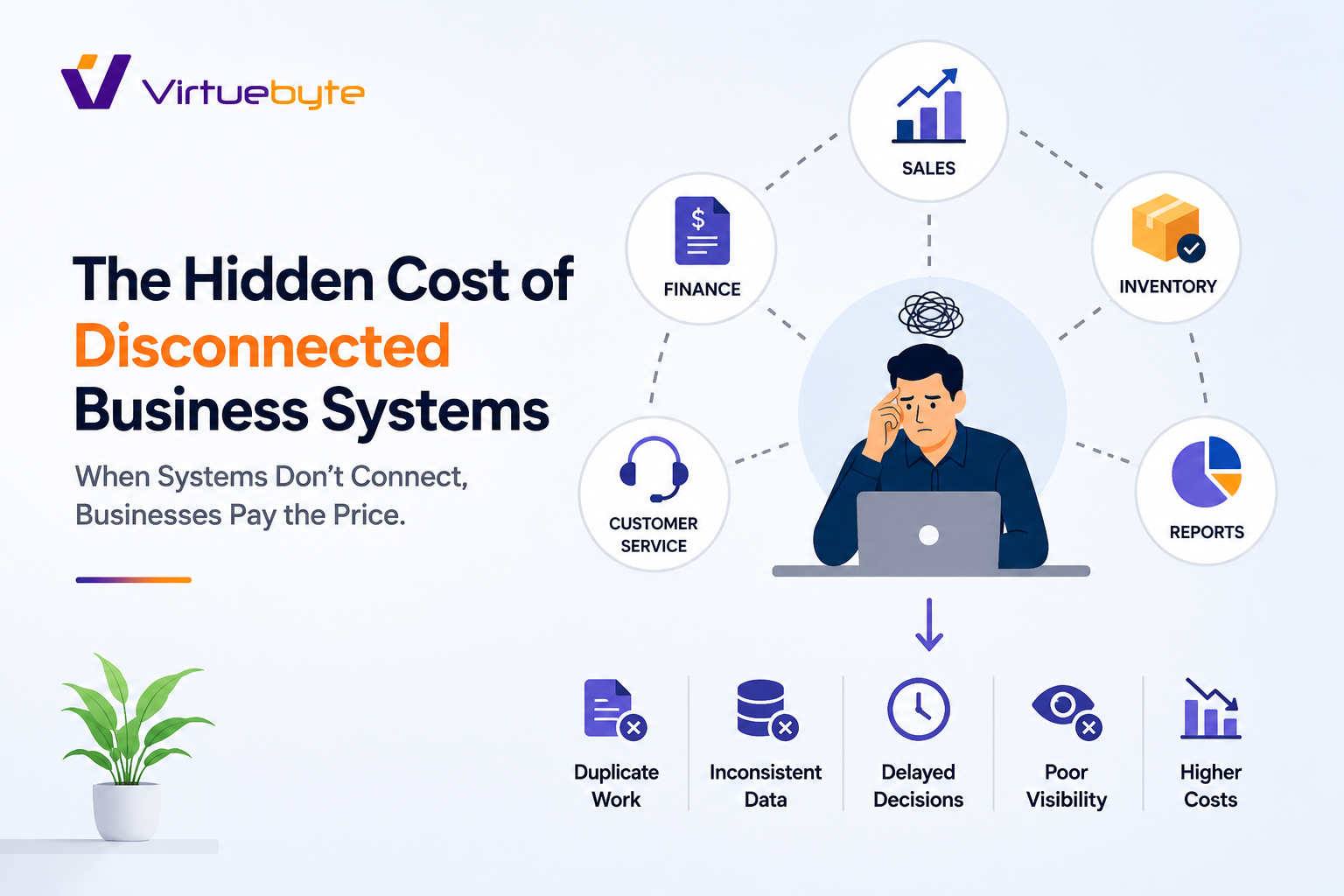
The Hidden Cost of Disconnected Business Systems: Why Integration Matters for Business Growth
Many businesses use different software for sales, finance, inventory, and customer service. While each system works independently, the lack of integration often leads to duplicate work, inconsistent data, delayed decisions, and limited visibility across operations.
Learn More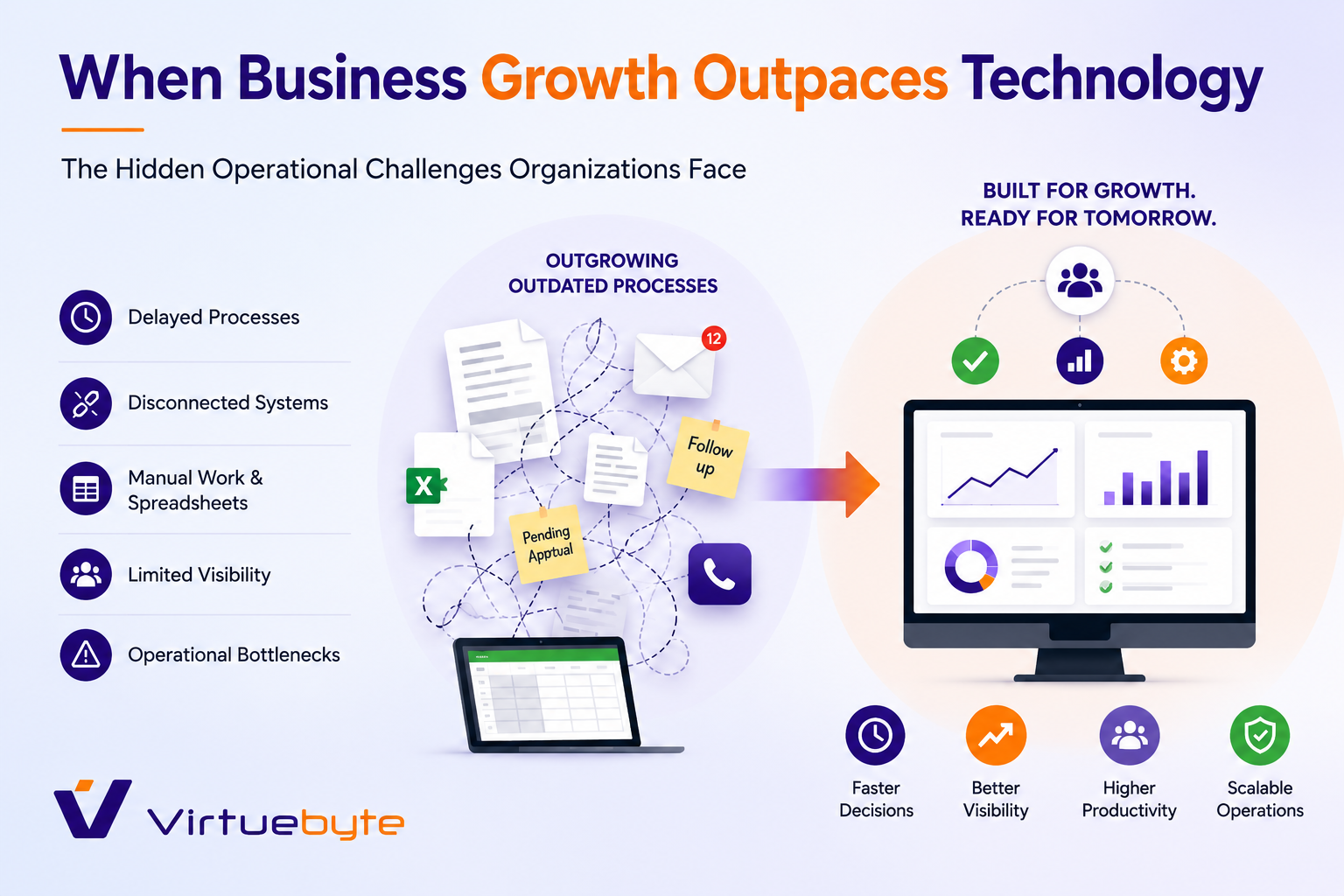
When Business Growth Outpaces Technology: The Hidden Operational Challenges Organizations Face
When Business Growth Outpaces Technology: The Hidden Operational Challenges Organizations Face
Learn More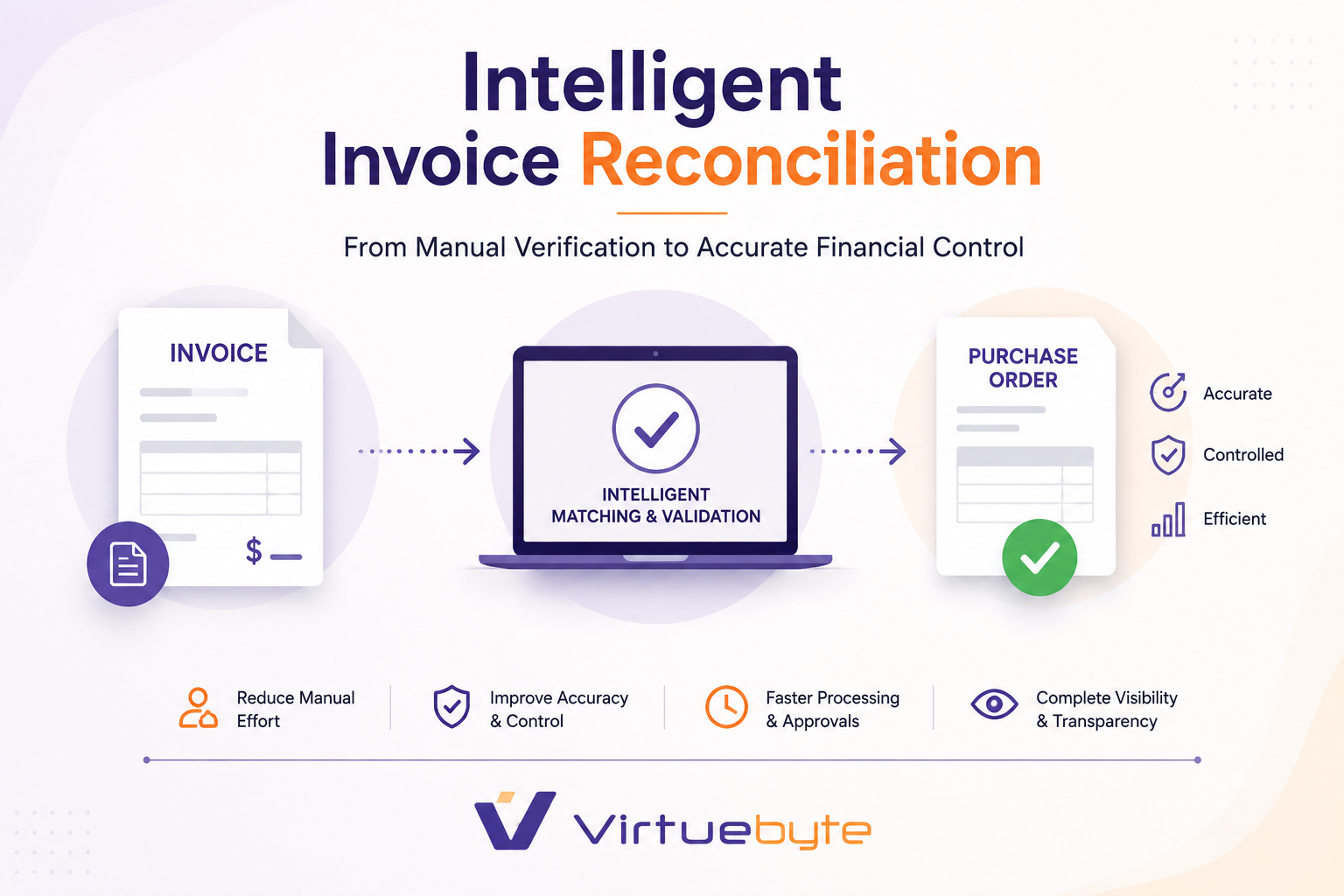
Intelligent Invoice Reconciliation: How Automated PO and Invoice Matching Improves Financial Accuracy
How Intelligent Invoice Reconciliation Improved Financial Accuracy and Operational Control
Learn More