
The Hidden Cost of Disconnected Business Systems: Why Integration Matters for Business Growth
Introduction
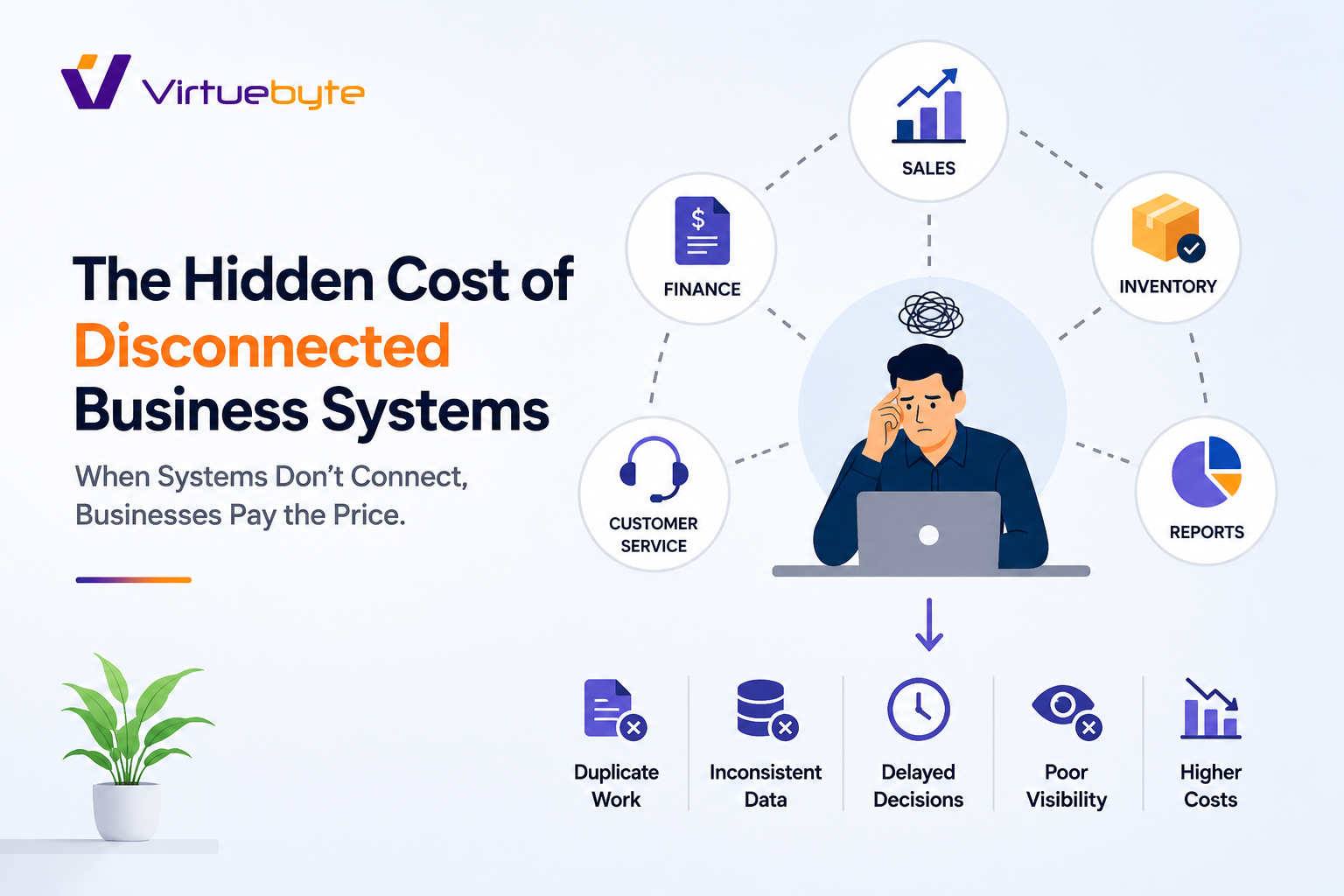
Many growing businesses use different software for different departments.
Sales teams work in one CRM.
Finance manages invoices in another system.
Inventory is maintained somewhere else.
Customer service relies on emails or spreadsheets.
Each system performs its own job well. The problem begins when these systems don't communicate with each other.
Over time, disconnected business systems create hidden costs that are rarely visible on financial reports but significantly impact productivity, customer experience, and business growth.
What Are Disconnected Business Systems?
A disconnected business environment is one where departments use separate applications without sharing information automatically.
For example:
- Sales uses a CRM
- Finance uses accounting software
- Inventory is managed separately
- Customer support has its own application
- Management depends on spreadsheets for reporting
Because information doesn't flow automatically, employees spend time manually transferring data between systems.
Common Challenges Businesses Face
Duplicate Data Entry
The same customer information is entered multiple times across different systems.
This increases workload and creates inconsistencies.
Poor Visibility
Management cannot easily answer simple questions like:
- Which orders are delayed?
- Which customers have pending invoices?
- Which quotations are awaiting approval?
Data exists, but not in one connected view.
Manual Coordination
Employees spend valuable time following up through emails, phone calls, or messaging platforms instead of focusing on productive work.
Delayed Decision Making
When reports come from multiple sources, decision-makers wait longer for accurate information.
Sometimes decisions are made using outdated data.
Customer Experience Suffers
Customers expect quick responses.
However, when teams don't have complete information, simple requests often require multiple follow-ups.
A Typical Example
Imagine a manufacturing company.
A salesperson creates a quotation.
Finance doesn't immediately know about the approval.
Inventory doesn't know whether stock should be reserved.
Service teams don't know whether installation needs scheduling.
Everyone is working.
Yet nobody is working together.
The Business Impact
Disconnected systems often result in:
- Higher operational costs
- Increased manual work
- More business errors
- Duplicate data
- Delayed customer responses
- Poor reporting
- Slower decision-making
- Reduced productivity
Most importantly, they prevent businesses from scaling efficiently.
How Connected Systems Change the Business
When business systems are connected:
- Information flows automatically.
- Teams work with the same data.
- Approvals become faster.
- Reports become more accurate.
- Customers receive quicker responses.
- Management gains complete visibility across operations.
Instead of departments working independently, the business begins operating as one connected ecosystem.
Final Thoughts
Technology alone doesn't improve business performance.
Connected processes do.
Many organizations invest in good software but continue to struggle because their systems operate in isolation.
The real opportunity lies in connecting business functions—not just implementing new technology.
When sales, finance, operations, inventory, and customer service work together through integrated systems, businesses spend less time managing information and more time creating value for customers.
\
\
Related Blog Posts
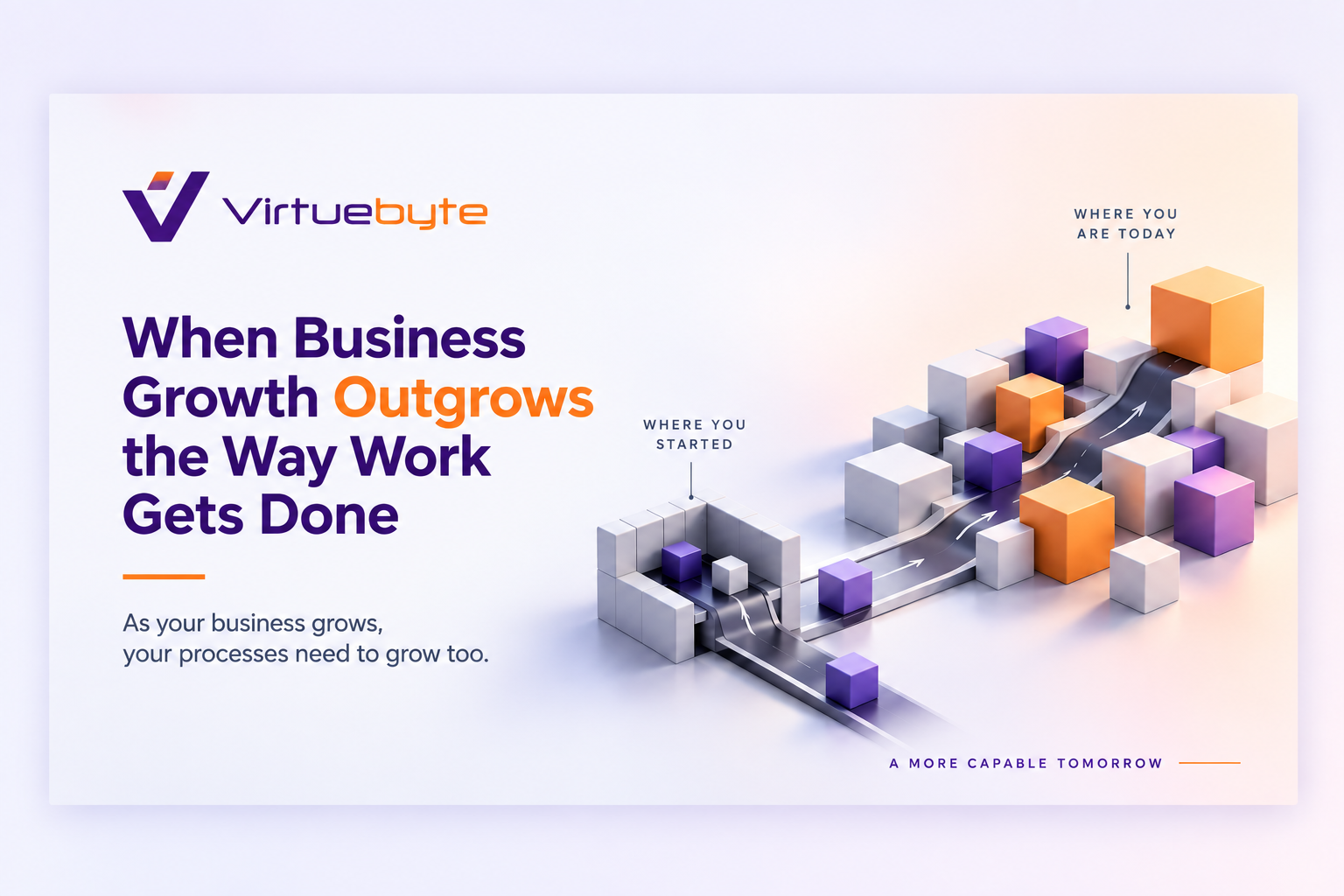
When Business Growth Outgrows the Way Work Gets Done
Business growth does not only bring more customers, employees, and revenue. It also changes how work needs to move through the organization. Learn how growing businesses can recognize when existing processes are no longer supporting the way the business operates today—and how better processes and technology can help reduce unnecessary complexity.
Learn More
The Silent Costs Businesses Don't Measure: How Everyday Operational Inefficiencies Impact Growth
As a business grows, the challenges are not always about finding more customers or hiring more people. Sometimes, the bigger challenge is managing the work that already exists. Manual follow-ups, repeated data entry, delayed approvals, and disconnected systems can quietly consume time and slow growth. This article looks at these everyday operational costs and why businesses should pay attention to them before they become bigger problems.
Learn More
The Silent Costs Businesses Don't Measure: How Everyday Operational Inefficiencies Impact Growth
As a business grows, the challenges are not always about finding more customers or hiring more people. Sometimes, the bigger challenge is managing the work that already exists. Manual follow-ups, repeated data entry, delayed approvals, and disconnected systems can quietly consume time and slow growth. This article looks at these everyday operational costs and why businesses should pay attention to them before they become bigger problems.
Learn More